Need A Plot? Experts Recycle Them

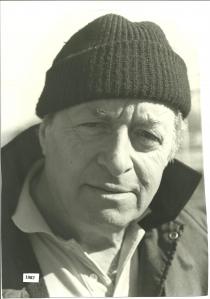
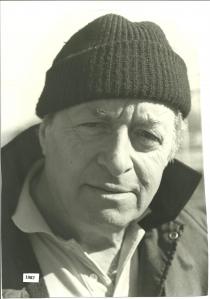
By Leonard Bishop, Author of Dare To Be A Great Writer

      There are three reference books that all unpublished (and many already published) writers must own: One Hundred Non-Royalty One-Act Plays (Grosset and Dunlap), 101 of the World’s Greatest Books (Greystone Press) and 101 Plots, Used and Abused (The Writer, Inc.)  They are an invaluable source of ideas for the unpublished writer.

The ‘romantic notions’ taught about fiction in the university writing classes must be demythologized.  Brought into reality.  All fiction writing is invented.  It is an interpretation of experience written as though the writer has lived that experience.  When an unpublished writer tells me, “I don’t know how to invent stories, plot situations, or interesting techniques,”  I always answer, “If you can’t invent, then adopt another writer’s invention.”  The writer is always shocked and shouts, “That’s dishonorable.  It’s plagiarism!”

If you are not lifting another writer’s prose and claiming it as your own, you are not plagiarizing.  Stories, dramatic situations and writing techniques are in the public domain.

Nothing original has been written since some prehistoric story teller carved fictionalized history on the walls of a cave.  Originality is not a publishing demand.  You are required only to write publishably.  Any effort beyond that might be judged as “art” and, by today’s publishing standards, that is not always publishable.

Studying the classics to learn about writing is futile.  Dostoevsky, Joyce, Dickens, Tolstoy are great because they probed and interpreted human experience.  Their storylines were simplistic, their plots predictable, their techniques minimal.  You must adopt and adapt from the professional hacks of today.  They are inventive.

Writers like Robbins, Wallace, Daniel Steel, Barbara Courtland, Janet Daily, seem to have their content dictated to them by the spirits of retarded lemmings.  Thus, they use elaborate storylines, panoramic plots, and razzle-dazzle techniques to conceal their nonsense.  Ignore their barfy content and adapt their innovative writing methods.

How are some bestsellers brought into existence today?

Some publishing executives and editors confer to discuss ideas.  One genius suddenly snaps a finger and bellows, “I have it!”

“The time is ripe for a novel about some neurotic medical student who kills two women.  The crime remains unsolved.  A detective who dabbles in psychology suspects the student but he has no proof.  He determines that the killer has a compulsion to confess.  He becomes friendly with the student.  Slyly draws him out.  In time the medical student confesses and is imprisoned.  The killer is happy because his guilt is expiated.  The detective feels redeemed for his efforts.  Do you see it?  Do you feel it?  It’s an eleven hour television mini-movie, a 40-million reprint sale, it’s ultra fantastic.”

The executives and editors huzzah and hallelujah.  “Great.  Perfect for Howard Fast.  Quick, check the office to see if it’s bugged.  Let’s get it into print before someone steals it.  Fast has too much integrity.  Joan Didion.  Too female.  Maybe Michener.  No, he’s too big.  Higgins, he’s great on adventure.”

Eventually the novel is written and published and often it is a mega-seller and the public rarely realizes they are re-reading Crime and Punishment.

There may be honor among thieves, but honor is not an often used word in modern publishing.

( first published June 17, 1984 The Manhattan Mercury)

©by Leonard Bishop

Posted in humor, publishing, teaching, Writing, Writing Techniques | Tagged , , , , , , , , , , , , , | Leave a comment

Writer’s Hint: Theatricality and Drama

From Leonard Bishop, Author of Dare to Be a Great Writer

Theatricality is visual, unusual, and gets the reader’s attention.  Drama holds the reader in an emotional strata.  That’s what the readers are engaged in.  (10-13-94)

©by Leonard Bishop

Posted in Writing, Writing Techniques | Tagged , , , , , , , | Leave a comment

Writer’s Hint: Characterization

From Leonard Bishop, Author of Dare to be a Great Writer:

Readers want extravagant forms of behavior.  This makes them [The characters] larger than life.  (6-21-96)

©by Leonard Bishop

Posted in Writing, Writing Techniques | Tagged , , , , , , | Leave a comment

Closet Writers Usually Turn To Dust

By Leonard Bishop

      There is a reason why many writers do not remain in the small towns of Kansas to achieve their recognition.  There are no writing environments to keep them.

A “writing environment” is a place where inexperienced but committed writers assemble for the purpose of learning about writing from each other.  It is a place where “being a writer” is an authentic identity.

Ever since the writing of stories and novels became a cultural and social influence, writers have been forced to find each other to offset the despair of estrangement.  The turbulence of the tragedy, drama, comedy, and outrage they carry, drives them unconventional.  They want to change their time which rejects them as rebels.  Being unusual, they are judged as peculiar.

In the early 1920’s and 1930’s, many writers left their rigid communities.  Scott Fitzgerald, Hemmingway, Nathaniel West, Gertrude Stein, Ezra Pound, Henry Miller –all found acceptance in France, England, Italy, Spain —where the “writer” was accorded respect.  They met in cafes, garrets, cellars, apartments.  They established clubs, associations.  They never doubted they would become famous.  Their astonishing dream was more inspiriting than their aloof society.

The expense of living in Europe today is prohibitive.  So the writers who will one day become important leave Wichita, Topeka, Manhattan, Kansas City, and travel to the coastal cities where such writing communities exist.  They meet each other and take the stand of “I am a writer” and do not feel like outcasts.

There are no instantly famous writers.  Writing is work.

Writers are always broke, and gloomy.  They grub for their subsistence, they hustle for the rent, bang away at odd jobs that keep them going one more month, to finish their novel.

In the late 1940’s when I began writing, I moved, played poker with, and bummed about with other writers who would not give up.  Mario Puzo had four children and worked in the post office for maybe $60 a week.  William Styron was just out of the Navy and straining to be understood through his southern accent while writing Lie Down In Darkness. Jack Kerouac was suicidal because his first novel Town and the City was hardly read.  Thomas Berger still had some hair while plugging at his Crazy in Berlin novel.  Norman Mailer had just published The Naked and the Dead and was preparing his personality for fame.  One day Puzo, after reading Joseph Heller’s novel, flung the pages across the room and said, “It’s nothing.  It’ll never sell.”  The novel was Catch 22.

We were writers serving our apprenticeship of obscurity.

We sought each other’s company.  Not because we liked each other.  We were writers.  We were competitive, envious, lonely.  We all knew we would make money and become famous.  There was no other way to live, no other person to be.  A writer.

Where is that writing environment in the cities and small towns of Kansas?  Tell someone you’re a struggling writer and they ask you what you do for work.

Closet writers usually turn to dust in the closet, or get involved in computer programming.

There are thousands of young writers hidden in Kansas.  Their dream hurts in them.  Fearfully they whisper, “Help me. Find me,” and are hardly heard.  They want to give Kansas a heritage and are ignored.  They must openly and heartily declare “I am a writer!” and seek each other’s company, or they are only frustrated, repressed individuals hurrying into peculiarity.

(first published June 10, 1984 The Manhattan Mercury)

©by Leonard Bishop

Posted in publishing, Writing, writing group, Writing Techniques | Tagged , , , , , , , , , , , , , , , , , , , , , | Leave a comment

Writing Hint: Narration

From Leonard Bishop, author of Dare to be a Great Writer

Narration saves bulk.  Use it!  Start as though you are writing headlines. (5/15/97)

©by Leonard Bishop

Posted in teaching, Writing, Writing Techniques | Tagged , , , , , , | Leave a comment

Writing Hint: Continuity

From Leonard Bishop, author of Dare to be a Great Writer

Continuity returns portions of what we already read into current material and extends it into the future.  (6/5/96)

©by Leonard Bishop

Posted in Writing, Writing Techniques | Tagged , , , | Leave a comment

Writing Hint: Creating Powerful, Dramatic Scenes

From Leonard Bishop, Author of Dare to be a Great Writer

Always know a scene can get shorter.  Your first priority is information, then visual action, physical and historical background, succinct and authentic dialogue, extended imagery, and finally, ask, “Does all the material fit in the dramatic scene?  (11/10/09)

©by Leonard Bishop

Posted in Writing, Writing Techniques | Tagged , , , , , , , , | Leave a comment

Writing Hint: Inspiration

From Leonard Bishop

We are onions with perceptions deeper than we think. We have to take risks and peel back the layers.  (8/22/96)

©by Leonard Bishop

Leonard Bishop was a champion of one-line inspiration for panicking writers!  Those of us who had him as a mentor were always scribbling down his sayings and retrieving them when we needed them the most.  Even ten years after his passing, we still find ourselves quoting him.  We, the authors of this site, hope that he can help you along as well!

Sincerely,

The Family, Colleagues, and Students of Leonard Bishop

(Please note: We are inserting hints here so they will be easier to find than the  text box on the sidebar)

Posted in Writing, Writing Techniques | Tagged , , , , | Leave a comment

Multiple Viewpoints: Farrell is example; Writers come, go

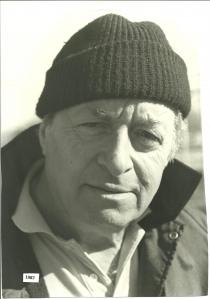
By Leonard Bishop

Sensible writers live with the knowledge that no matter how great or popular they become, they are quickly replaceable.  Who today, ever reads or remembers James T. Farrell?

In the 1930’s, 1940’s, and into the 1950’s, writers and readers were overwhelmed by the power and magnitude of his books.  His American classic Studs Lonigan was so blunt and naturalistic it had to be issued as a medical book.  His short stories about the peat-bog Irish in Chicago were printed in all magazines.  His books of critical essays, particularly The League of Frightened Philistines is still a model of organized outrage against the “big lie” of society, the asininity of the political mind, the fakery and corrupt influence of Hollywood.

In his later years, when he was sick and realized that he was ignored by the ‘award givers,’ he still wrote what he believed should be written.

I used to play chess and party with James T. Farrell.  He was a friendly, hard drinking man who always helped younger writers.  His review and testimony about my first novel helped it become a best seller.

In 1958 he was asked by Columbia University to “team-teach” a course in creative writing.  He asked if I would teach with him.  It almost destroyed our relationship.

His eyes were becoming weak and I was openly antisocial.  We came to an arrangement.  I would read the students’ manuscripts and save his eyes; he would attend the faculty functions and save my reputation.

We were vigorous instructors.  The students were working on their master and doctoral degrees.  Their years of academic training had lobotomized them from personal expression, from an awareness of human drama.  They were horrible writers.  They were unteachable.  I kept reading the banal, pedantic stories.  Jimmy kept going to the faculty teas to chat with the professors of history, music, sociology, Greek philosophy, etc.  We disliked the students because they were educated frumps.  The students hated us because we were not professors.

One evening, before a class started, Jimmy came charging into the room and began cursing me out as a clever, shrewd, cunning Jew who had taken advantage of him, a genial, happy-go-lucky Irishman.  He pounded the desk, kicked the chairs, flung erasers at the blackboard.  I stood there, not knowing whether to hear him out or to punch him out.  “What the #&*($# is wrong with you Jimmy?  What the *%#^&#$ did I do?”  He shook his fist at me.  “You deliberately maneuvered me into believing my eyes were weak so you could read the manuscripts to drive me into attending the faculty functions.  I’d rather go blind and lose my virility than attend another one!”

We argued.  I refused to relent on the arrangements.  Being in the presence of the academic mind is like living in the center of stale bread.

He got drunk that night.  The next day he was calmer.  He concluded that only a truly great writer and a magnanimous humanitarian had the nobility to endure a prolonged interval with a university faculty.  He kept to our arrangement but taught through clenched teeth.

James T. Farrell is dead now, and I miss him.  When I re-read his books, I feel his presence.

(first published June 3, 1984 The Manhattan Mercury)

©by Leonard Bishop
Posted in humor, publishing, slice of life, teaching, Writing, Writing Techniques | Tagged , , , , , , , | Leave a comment

Multiple Viewpoints

Coming to this site:  We will be featuring Leonard Bishop, a best-selling author and writing teacher.  We hope you are entertained and enlightened.  He always did that for us, his family, fellow writers, and students.  We hope to pass it on!

Posted in publishing, teaching, Writing, Writing Techniques | Tagged , , , , , , , | Leave a comment